
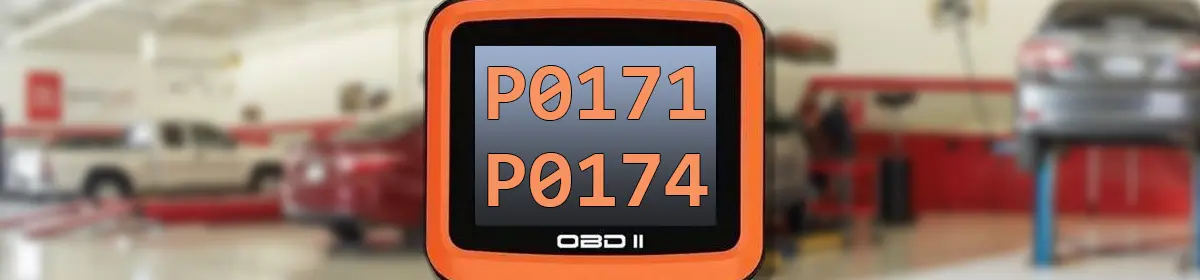
DTC P0171 and P0174
Issue Description
The P0171 error code specifically refers to a "System Too Lean (Bank 1)", while P0174 refers to "System Too Lean (Bank 2)". The Engine Control Module (ECM) detects an imbalance in the air-fuel mixture by analyzing data from the oxygen sensors and the Mass Airflow (MAF) sensor. When the ECM detects an excessively lean condition, it triggers the P0171 or P0174 code, depending on which bank is affected.
If the issue is not resolved, the engine may struggle to operate efficiently, leading to drivability problems and potential long-term mechanical damage.
Causes
Several factors can contribute to the P0171 and P0174 error codes, including:
- Vacuum Leaks: Leaks in the intake manifold, vacuum hoses, or gaskets can cause unmetered air to enter the engine.
- Dirty or Faulty Mass Airflow (MAF) Sensor: A contaminated MAF sensor can provide incorrect air intake readings.
- Faulty Oxygen (O2) Sensors: A malfunctioning O2 sensors can send incorrect data to the ECM.
- Clogged or Failing Fuel Injectors: Dirty or malfunctioning injectors may restrict fuel delivery.
- Weak Fuel Pump or Low Fuel Pressure: A failing fuel pump or a clogged fuel filter can limit fuel supply.
- Exhaust Leaks: Leaks before the oxygen sensors can cause incorrect air-fuel ratio readings.
- Dirty or Failing PCV Valve: A stuck-open Positive Crankcase Ventilation (PCV) valve can cause excessive air intake.
Symptoms
If your Toyota has a P0171 or P0174 error code, you may experience the following symptoms:
- Check Engine Light (CEL) is On
- Rough Idling or Engine Hesitation
- Reduced Power and Acceleration
- Increased Fuel Consumption
- Engine Stalling or Misfiring
- Unusual Exhaust Smell (High Oxygen Content)
Solutions
- Check for Vacuum Leaks
- Inspect vacuum hoses, intake manifold gaskets, and PCV valve for leaks.
- Use a smoke test to detect small leaks.
- Replace damaged components.
- Clean or Replace the Mass Airflow (MAF) Sensor
- Remove the MAF sensor and clean it with MAF cleaner.
- Replace if faulty or providing incorrect readings.
- Inspect and Replace the Oxygen Sensors if Necessary
- Use an OBD-II scanner to check oxygen sensor performance.
- Replace if readings are inconsistent or sensors are old.
- Check and Clean Fuel Injectors
- Use a fuel injector cleaner to remove deposits.
- Replace clogged or malfunctioning injectors if necessary.
- Test Fuel Pressure
- Use a fuel pressure gauge to check for proper pressure levels.
- Replace a weak fuel pump or clogged fuel filter if pressure is too low.
- Inspect for Exhaust Leaks
- Check the exhaust manifold and pipes for leaks before the oxygen sensor.
- Repair or replace damaged exhaust components.
- Examine the PCV Valve
- Check if the PCV valve is stuck open and allowing excess air intake.
- Replace if necessary.
- Reset the ECM and Perform a Test Drive
- Use an OBD-II scanner to clear the code after repairs.
- Drive the vehicle and monitor for returning codes.


