
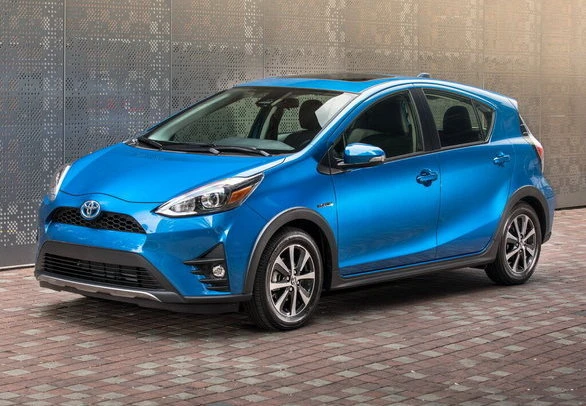
The Toyota Prius C is a compact and efficient subcompact hybrid car that delivers excellent fuel economy and eco-friendly performance. With its smaller size and nimble handling, the Prius C is ideal for city driving and urban environments. The hybrid powertrain combines a gasoline engine with an electric motor, providing a smooth and efficient driving experience with reduced emissions. The Prius C features a modern and comfortable interior, equipped with tech-savvy features for a connected driving experience. Known for its reliability, affordability, and eco-friendly credentials, the Toyota Prius C is a smart choice for drivers looking for a practical and fuel-efficient vehicle that helps reduce their carbon footprint without compromising on comfort and convenience.
TOYOTA PRIUS C PROBLEMS
-

Worst Year
2012
-

Worst Module
Electrical
Issues by Year
Years to avoid. Click on columns for details
Malfunction Modules
Compare how reliable modules are. Select component for details
Best and Worst Years
-
Best Choice
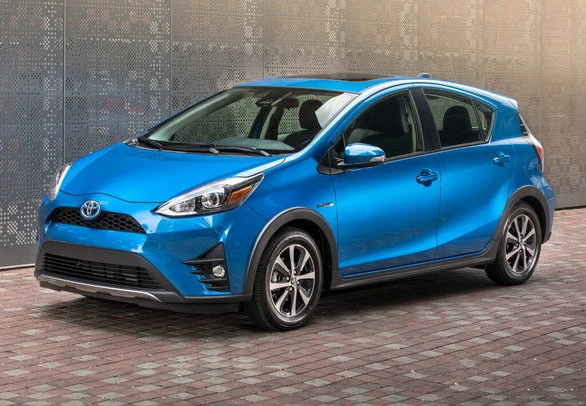
2017 Prius C
Car owners are faced with the first problems after 21000 miles.
Total Complaints:
2 issues
-
Worst Choice

2012 Prius C
Car owners are faced with the first problems after 500 miles.
Total Complaints:
66 issues
Common Complaints and Reliability
-
1. Braking Issues:
- Brake failure and reduced braking power.
- ABS system malfunction leading to accidents.
- Brake booster failure causing warning lights and braking delays.
- Rear brakes locking up in wet conditions.
- Brakes becoming overly sensitive in damp weather.
- Parking brake releasing at low speeds.
- Code C1391 indicating brake booster and accumulator issues.
- Master cylinder failure leading to increased stopping distances.
- Brake failure and reduced braking power.
-
2. Engine & Hybrid System Problems:
- Hybrid inverter failure leading to sudden stalls.
- Loss of power while driving, especially in high temperatures.
- Hybrid battery and electrical system malfunctions.
- Rough transitions between electric and gas power.
- Engine stalling unexpectedly in traffic.
- Transaxle and CVT transmission failures.
- Hybrid inverter failure leading to sudden stalls.
-
3. Unintended Acceleration & Deceleration:
- Sudden unintended acceleration while braking or stopped.
- Vehicle surging forward unexpectedly.
- Car failing to accelerate from a stop.
- Fuel gauge misreading, causing sudden shutdowns.
- Sudden unintended acceleration while braking or stopped.
-
4. Structural & Electrical Issues:
- Rear windshield shattering unexpectedly.
- Water leaks into taillights, leading to failures.
- Headlights frequently burning out or failing.
- Door locks malfunctioning, requiring manual operation.
- Wiring damage caused by rodents due to soy-based insulation.
- Rear windshield shattering unexpectedly.
-
5. Airbags & Safety System Failures:
- Airbags failing to deploy in collisions.
- Seat belts not locking during crashes.
- Hybrid system failures affecting vehicle control.
- Faulty navigation system requiring excessive driver attention.
- Airbags failing to deploy in collisions.
-
6. Steering & Suspension Issues:
- Loss of steering control due to internal column failure.
- Vehicle swaying or feeling unstable at highway speeds.
- Inner tie rod issues requiring full steering assembly replacement.
- Loss of steering control due to internal column failure.
-
7. Miscellaneous Issues:
- Smart key system allowing the car to be locked with the key inside.
- Mold buildup in the instrument panel due to moisture.
- Navigation system failing to give voice prompts, distracting drivers.
- Smart key system allowing the car to be locked with the key inside.
Questions
-
Is the Toyota Prius C a good car?
Yes, the Toyota Prius c is considered a good car for those seeking a fuel-efficient and eco-friendly vehicle. The Prius c offers excellent fuel economy, a comfortable ride, and a practical compact size that makes it well-suited for city driving. It features Toyota's hybrid technology, which combines a gasoline engine with an electric motor for improved efficiency and lower emissions. The Prius c is known for its reliability, affordability, and user-friendly technology features. While it may not offer as much power or upscale amenities as some other hybrid models, the Prius c's overall value, efficiency, and environmentally conscious design make it a popular choice for those looking for a reliable and fuel-efficient compact car.
-
Why was the Prius C discontinued?
The Toyota Prius c was discontinued due to declining sales, shifting consumer preferences towards larger vehicles, and the overall market trend favoring crossover SUVs over subcompact cars. The Prius c, known for its fuel efficiency and affordability, faced challenges in a competitive market where hybrid technology was integrated into a wider range of Toyota models. The decision to discontinue the Prius c allowed Toyota to focus on more popular models and adapt to changing consumer demands by prioritizing hybrids in other segments of their lineup. Additionally, advancements in hybrid technology and the availability of other fuel-efficient options may have played a role in the discontinuation of the Prius c.
Other Models
- 4Runner Number of complaints: 6653
- 86 Number of complaints: 13
- Avalon Number of complaints: 3905
- Avalon Hybrid Number of complaints: 66
- Avensis Number of complaints: 2
- C-HR Number of complaints: 221
- Camry Number of complaints: 20484
- Camry Hybrid Number of complaints: 1556
- Cavalier Number of complaints: 2
- Celica Number of complaints: 513
- Corolla Number of complaints: 13040
- Corolla Cross Number of complaints: 278
- Corolla Cross Hybrid Number of complaints: 2
- Corolla Hatchback Number of complaints: 2
- Corolla Hybrid Number of complaints: 3
- Corolla iM Number of complaints: 24
- Corona Number of complaints: 2
- Corona Station Wagon Number of complaints: 1
- Cressida Number of complaints: 55
- Crown Number of complaints: 7
- Echo Number of complaints: 248
- FJ Cruiser Number of complaints: 1068
- GR Corolla Number of complaints: 3
- GR86 Number of complaints: 24
- Grand Highlander Number of complaints: 27
- Grand Highlander Hybrid Number of complaints: 1
- Highlander Number of complaints: 4934
- Highlander Hybrid Number of complaints: 1024
- Hilux Number of complaints: 499
- Land Cruiser Number of complaints: 349
- MR2 Number of complaints: 60
- MR2 Spyder Number of complaints: 37
- Matrix Number of complaints: 1817
- Mirai Number of complaints: 19
- Motorhome Number of complaints: 16
- Paseo Number of complaints: 43
- PreRunner Number of complaints: 30
- Previa Number of complaints: 258
- Prius Number of complaints: 14097
- Prius C Number of complaints: 197
- Prius Plug-in Hybrid Number of complaints: 74
- Prius Prime Number of complaints: 94
- Prius V Number of complaints: 454
- RAV4 Number of complaints: 9230
- RAV4 EV Number of complaints: 31
- RAV4 Hybrid Number of complaints: 87
- RAV4 Prime Number of complaints: 106
- Scion FR-S Number of complaints: 5
- Scion iQ Number of complaints: 1
- Scion tC Number of complaints: 28
- Scion xB Number of complaints: 12
- Scion xD Number of complaints: 3
- Sequoia Number of complaints: 4537
- Sequoia SR5 Number of complaints: 175
- Sienna Number of complaints: 10097
- Sienna Hybrid Number of complaints: 19
- Solara Number of complaints: 1018
- Sunrader Number of complaints: 2
- Supra Number of complaints: 100
- T100 Number of complaints: 399
- Tacoma Number of complaints: 9168
- Tercel Number of complaints: 383
- Tundra Number of complaints: 6943
- Tundra Hybrid Number of complaints: 4
- Van Number of complaints: 41
- Venza Number of complaints: 715
- Venza Hybrid Number of complaints: 7
- Yaris Number of complaints: 1146
- Yaris iA Number of complaints: 25
- bZ4X Number of complaints: 7