
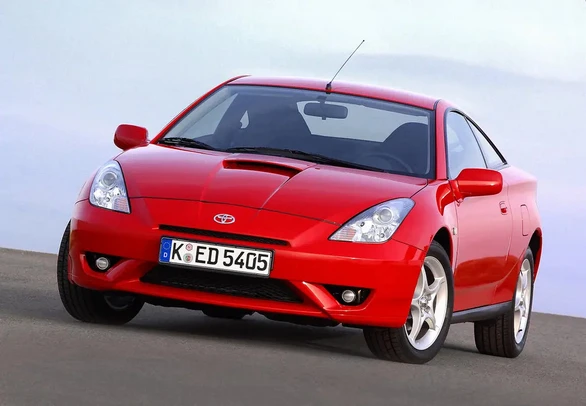
The Toyota Celica is a stylish and sporty coupe that has been a favorite among driving enthusiasts for many years. With its sleek design, agile handling, and peppy performance, the Celica offers an exhilarating driving experience. The interior is driver-focused, with supportive seats and intuitive controls that make every drive a pleasure. The Celica is known for its reliability and durability, making it a practical choice for those who appreciate both performance and dependability. Whether cruising city streets or tackling winding roads, the Toyota Celica delivers on both style and substance, making it a beloved choice for drivers looking for a fun and engaging ride.
TOYOTA CELICA PROBLEMS
-

Worst Year
2000
-

Worst Module
Engine
Issues by Year
Years to avoid. Click on columns for details
Malfunction Modules
Compare how reliable modules are. Select component for details
Best and Worst Years
-
Best Choice
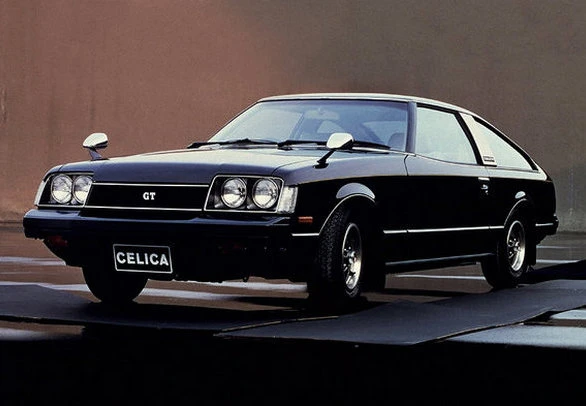
1977 Celica
Car owners are faced with the first problems after 14 years of operation
Total Complaints:
1 issues
-
Worst Choice
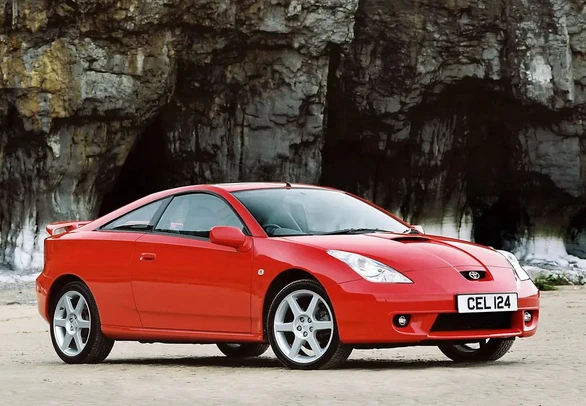
2000 Celica
Car owners are faced with the first problems after 128 miles.
Total Complaints:
128 issues
Common Complaints and Reliability
-
1. Airbag and Safety System Failures:
- Driver and passenger airbags failing to deploy during collisions
- False or delayed airbag deployments causing injuries or unnecessary damage
- Airbag sensors and lights malfunctioning, requiring repeated repairs
- Driver and passenger airbags failing to deploy during collisions
-
2. Seat Belt Defects:
- Seat belts failing to retract properly, leaving occupants unsecured
- Buckles and retractors breaking, causing safety concerns
- Seat belts failing to retract properly, leaving occupants unsecured
-
3. Engine and Transmission Issues:
- Engine stalling, surging, or failing due to carbon buildup and defective components
- Frequent transmission failures, including shifting difficulties and gear grinding
- Persistent fuel leaks from damaged hoses or faulty injectors
- Engine stalling, surging, or failing due to carbon buildup and defective components
-
4. Brake System Problems:
- Brake pedal sinking or becoming unresponsive
- Corroded brake lines leading to brake fluid leaks and system failure
- Brake pedal sinking or becoming unresponsive
-
5. Suspension and Steering Defects:
- Steering linkage and stabilizer bar failures causing loss of control
- Faulty wheel bearings and axles leading to noise, vibration, and safety hazards
- Steering linkage and stabilizer bar failures causing loss of control
-
6. Body and Structural Issues:
- Frame and hinge corrosion causing hoods and trunks to fail to close properly
- Convertible tops leaking or windows detaching
- Frame and hinge corrosion causing hoods and trunks to fail to close properly
-
7. Electrical and Electronic Malfunctions:
- Electrical fires caused by wiring harness or amplifier failures
- Dash and dome lights flickering or failing intermittently
- Electrical fires caused by wiring harness or amplifier failures
-
8. Tires and Wheels:
- Tire tread separation and blowouts even with low-mileage tires
- Vehicle pulling to one side and alignment issues
- Tire tread separation and blowouts even with low-mileage tires
-
9. Interior and Comfort System Defects:
- Air conditioning systems leaking or failing to cool
- Convertible rear windows detaching or breaking due to improper design
- Air conditioning systems leaking or failing to cool
-
10. Unintended Acceleration:
- Sticky gas pedals causing vehicles to accelerate uncontrollably
- Sudden throttle surges linked to cruise control malfunctions
- Sticky gas pedals causing vehicles to accelerate uncontrollably
Questions
-
Why did the Toyota Celica discontinued?
The Toyota Celica was discontinued due to declining sales and a shift in consumer preferences towards SUVs and crossovers. As the automotive market trended towards larger vehicles, demand for compact sports cars like the Celica waned, leading Toyota to discontinue the model in 2006. Additionally, changing regulations, emissions standards, and production costs may have also played a role in the decision to end the Celica's production. Toyota shifted its focus to other models that aligned more closely with market demands and industry trends, leading to the discontinuation of the Celica after several decades as a popular and sporty compact car.
Other Models
- 4Runner Number of complaints: 6653
- 86 Number of complaints: 13
- Avalon Number of complaints: 3905
- Avalon Hybrid Number of complaints: 66
- Avensis Number of complaints: 2
- C-HR Number of complaints: 221
- Camry Number of complaints: 20484
- Camry Hybrid Number of complaints: 1556
- Cavalier Number of complaints: 2
- Celica Number of complaints: 513
- Corolla Number of complaints: 13040
- Corolla Cross Number of complaints: 278
- Corolla Cross Hybrid Number of complaints: 2
- Corolla Hatchback Number of complaints: 2
- Corolla Hybrid Number of complaints: 3
- Corolla iM Number of complaints: 24
- Corona Number of complaints: 2
- Corona Station Wagon Number of complaints: 1
- Cressida Number of complaints: 55
- Crown Number of complaints: 7
- Echo Number of complaints: 248
- FJ Cruiser Number of complaints: 1068
- GR Corolla Number of complaints: 3
- GR86 Number of complaints: 24
- Grand Highlander Number of complaints: 27
- Grand Highlander Hybrid Number of complaints: 1
- Highlander Number of complaints: 4934
- Highlander Hybrid Number of complaints: 1024
- Hilux Number of complaints: 499
- Land Cruiser Number of complaints: 349
- MR2 Number of complaints: 60
- MR2 Spyder Number of complaints: 37
- Matrix Number of complaints: 1817
- Mirai Number of complaints: 19
- Motorhome Number of complaints: 16
- Paseo Number of complaints: 43
- PreRunner Number of complaints: 30
- Previa Number of complaints: 258
- Prius Number of complaints: 14097
- Prius C Number of complaints: 197
- Prius Plug-in Hybrid Number of complaints: 74
- Prius Prime Number of complaints: 94
- Prius V Number of complaints: 454
- RAV4 Number of complaints: 9230
- RAV4 EV Number of complaints: 31
- RAV4 Hybrid Number of complaints: 87
- RAV4 Prime Number of complaints: 106
- Scion FR-S Number of complaints: 5
- Scion iQ Number of complaints: 1
- Scion tC Number of complaints: 28
- Scion xB Number of complaints: 12
- Scion xD Number of complaints: 3
- Sequoia Number of complaints: 4537
- Sequoia SR5 Number of complaints: 175
- Sienna Number of complaints: 10097
- Sienna Hybrid Number of complaints: 19
- Solara Number of complaints: 1018
- Sunrader Number of complaints: 2
- Supra Number of complaints: 100
- T100 Number of complaints: 399
- Tacoma Number of complaints: 9168
- Tercel Number of complaints: 383
- Tundra Number of complaints: 6943
- Tundra Hybrid Number of complaints: 4
- Van Number of complaints: 41
- Venza Number of complaints: 715
- Venza Hybrid Number of complaints: 7
- Yaris Number of complaints: 1146
- Yaris iA Number of complaints: 25
- bZ4X Number of complaints: 7