
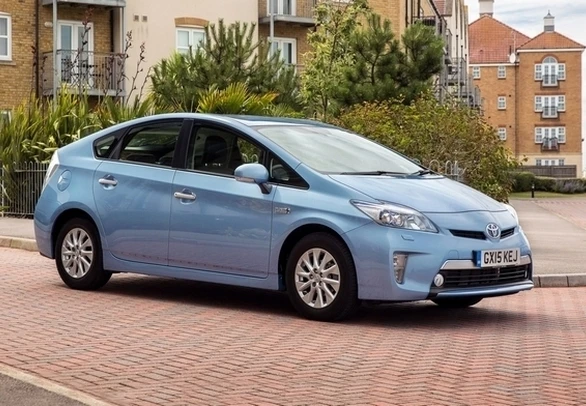
The Toyota Prius Plug-in Hybrid is an eco-friendly and versatile vehicle that offers the benefits of a traditional hybrid with the added flexibility of plug-in charging capability. With its hybrid powertrain that includes a larger battery pack, the Prius Plug-in Hybrid can run on electricity alone for short distances, reducing fuel consumption and emissions. This makes it an ideal choice for drivers looking to reduce their carbon footprint and save on fuel costs. The Prius Plug-in Hybrid also maintains the same spacious interior, smooth ride, and advanced technology features of the traditional Prius, providing a comfortable and connected driving experience with the added benefit of extended electric range.
TOYOTA PRIUS PLUG-IN HYBRID PROBLEMS
-

Worst Year
2012
-

Worst Module
Brakes
Issues by Year
Years to avoid. Click on columns for details
Malfunction Modules
Compare how reliable modules are. Select component for details
Best and Worst Years
-
Best Choice

2011 Prius Plug-in Hybrid
Car owners are faced with the first problems after 8 years of operation
Total Complaints:
1 issues
-
Worst Choice
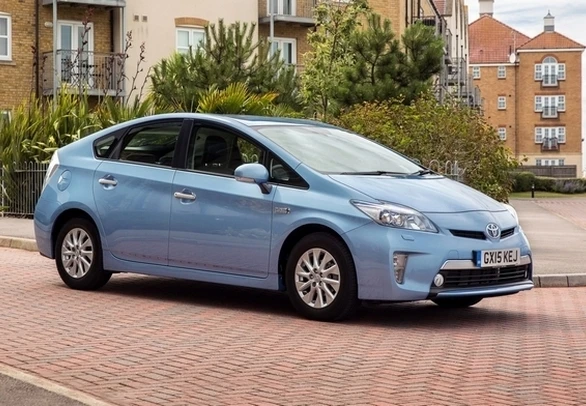
2012 Prius Plug-in Hybrid
Car owners are faced with the first problems after 200 miles.
Total Complaints:
24 issues
Common Complaints and Reliability
-
1. Brake System Issues:
- ABS system failure (Code C1391 - abnormal leak in accumulator)
- Brake booster and pump failure
- Brake pedal becoming unresponsive or requiring excessive force
- Sudden loss of braking power leading to accidents
- Inconsistent or sluggish braking
- Hybrid braking system failure causing loss of control
- Recall-related brake system malfunctions
- ABS system failure (Code C1391 - abnormal leak in accumulator)
-
2. Hybrid & Electrical System Failures:
- Hybrid system inverter failure
- Sudden loss of power while driving
- EV fuse malfunction causing hybrid system shutdown
- Safety connect communication module failure
- Hybrid propulsion system recall issues
- Hybrid system inverter failure
-
3. Acceleration & Stability Problems:
- Unintended acceleration while shifting gears
- Electronic stability control malfunction causing unexpected braking
- Car braking suddenly by itself while driving
- Car rolling forward or reversing unexpectedly
- Unintended acceleration while shifting gears
-
4. Engine & Mechanical Issues:
- Excessive oil consumption
- Oil leaking into the intake manifold causing overheating and potential engine failure
- Water pump failure leading to head gasket issues
- Engine overheating and white smoke from the exhaust
- Rear axle failure
- Excessive oil consumption
-
5. Electrical & Component Failures:
- Multiple door lock actuator failures, leading to being locked out of the car
- Battery hold-down bracket breaking repeatedly
- Instrument panel lighting malfunction
- Repeated headlight bulb burnouts
- Faulty seat belt mechanism (locking up and failing to release)
- Persistent air conditioning foul odor
- Multiple door lock actuator failures, leading to being locked out of the car
-
6. Structural & Safety Concerns:
- Weak windshield prone to cracking easily from minor impacts
- Faulty radar cruise control leading to loss of braking function
- Poor head restraint (causing discomfort and potential injury)
- Defective rear tire blowout at high speeds
- Weak windshield prone to cracking easily from minor impacts
Other Models
- 4Runner Number of complaints: 6653
- 86 Number of complaints: 13
- Avalon Number of complaints: 3905
- Avalon Hybrid Number of complaints: 66
- Avensis Number of complaints: 2
- C-HR Number of complaints: 221
- Camry Number of complaints: 20484
- Camry Hybrid Number of complaints: 1556
- Cavalier Number of complaints: 2
- Celica Number of complaints: 513
- Corolla Number of complaints: 13040
- Corolla Cross Number of complaints: 278
- Corolla Cross Hybrid Number of complaints: 2
- Corolla Hatchback Number of complaints: 2
- Corolla Hybrid Number of complaints: 3
- Corolla iM Number of complaints: 24
- Corona Number of complaints: 2
- Corona Station Wagon Number of complaints: 1
- Cressida Number of complaints: 55
- Crown Number of complaints: 7
- Echo Number of complaints: 248
- FJ Cruiser Number of complaints: 1068
- GR Corolla Number of complaints: 3
- GR86 Number of complaints: 24
- Grand Highlander Number of complaints: 27
- Grand Highlander Hybrid Number of complaints: 1
- Highlander Number of complaints: 4934
- Highlander Hybrid Number of complaints: 1024
- Hilux Number of complaints: 499
- Land Cruiser Number of complaints: 349
- MR2 Number of complaints: 60
- MR2 Spyder Number of complaints: 37
- Matrix Number of complaints: 1817
- Mirai Number of complaints: 19
- Motorhome Number of complaints: 16
- Paseo Number of complaints: 43
- PreRunner Number of complaints: 30
- Previa Number of complaints: 258
- Prius Number of complaints: 14097
- Prius C Number of complaints: 197
- Prius Plug-in Hybrid Number of complaints: 74
- Prius Prime Number of complaints: 94
- Prius V Number of complaints: 454
- RAV4 Number of complaints: 9230
- RAV4 EV Number of complaints: 31
- RAV4 Hybrid Number of complaints: 87
- RAV4 Prime Number of complaints: 106
- Scion FR-S Number of complaints: 5
- Scion iQ Number of complaints: 1
- Scion tC Number of complaints: 28
- Scion xB Number of complaints: 12
- Scion xD Number of complaints: 3
- Sequoia Number of complaints: 4537
- Sequoia SR5 Number of complaints: 175
- Sienna Number of complaints: 10097
- Sienna Hybrid Number of complaints: 19
- Solara Number of complaints: 1018
- Sunrader Number of complaints: 2
- Supra Number of complaints: 100
- T100 Number of complaints: 399
- Tacoma Number of complaints: 9168
- Tercel Number of complaints: 383
- Tundra Number of complaints: 6943
- Tundra Hybrid Number of complaints: 4
- Van Number of complaints: 41
- Venza Number of complaints: 715
- Venza Hybrid Number of complaints: 7
- Yaris Number of complaints: 1146
- Yaris iA Number of complaints: 25
- bZ4X Number of complaints: 7