
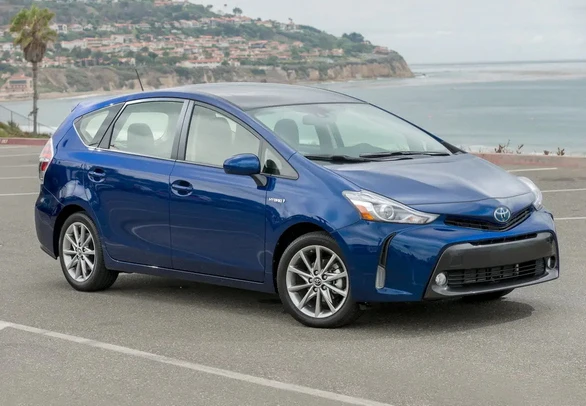
The Toyota Prius V is a spacious and versatile hybrid wagon that offers a perfect blend of fuel efficiency, practicality, and comfort. With its larger size compared to the traditional Prius, the Prius V provides generous cargo space and seating for up to five passengers, making it an ideal choice for families and those with active lifestyles. The hybrid powertrain delivers excellent fuel economy and low emissions, while the comfortable interior and modern technology features ensure a pleasant driving experience. The Prius V combines the environmental benefits of a hybrid with the spaciousness and flexibility of a wagon, making it a top choice for drivers looking for a capable and eco-friendly vehicle with ample room for both passengers and cargo.
TOYOTA PRIUS V PROBLEMS
-

Worst Year
2012
-

Worst Module
Brakes
Issues by Year
Years to avoid. Click on columns for details
Malfunction Modules
Compare how reliable modules are. Select component for details
Best and Worst Years
-
Best Choice

2011 Prius V
Car owners are faced with the first problems after 150000 miles.
Total Complaints:
1 issues
-
Worst Choice

2012 Prius V
Car owners are faced with the first problems after 5 miles.
Total Complaints:
240 issues
Common Complaints and Reliability
-
1. Brake System Issues:
- Brakes suddenly failing, leading to collisions
- ABS system failure and loss of stopping power
- Brake actuator failure causing inconsistent braking response
- Grinding, groaning, or howling brake noises that worsen over time
- Brakes releasing and vehicle accelerating over potholes or uneven roads
- Brake pedal sinking to the floor and becoming unresponsive
- Sudden unintended braking, causing safety hazards
- Toyota service unable to resolve brake noise complaints
- Brakes suddenly failing, leading to collisions
-
2. Hybrid & Electrical System Failures:
- Hybrid inverter failure leading to vehicle shutdown while driving
- Vehicle shifting into neutral unexpectedly and coming to a stop
- Software updates reducing fuel efficiency
- Hybrid battery degradation and sudden loss of power
- Electrical system malfunction causing smoke from the dashboard
- Smart key frequency interfering with medical devices like insulin pumps
- Hybrid inverter failure leading to vehicle shutdown while driving
-
3. Acceleration & Stability Problems:
- Unintended acceleration after hitting bumps or potholes
- Vehicle rolling backward on inclines due to lack of hill hold assist
- Car shifting into reverse when attempting to engage drive
- Traction control failing to allow movement in light winter conditions
- Sudden loss of power steering, making the car difficult to control
- Unintended acceleration after hitting bumps or potholes
-
4. Structural & Safety Concerns:
- Windshield easily cracking and expanding rapidly due to thin glass
- Weak headrests causing discomfort and inadequate support
- Airbags failing to deploy during collisions, leading to injuries
- Rodents chewing through hybrid wiring, causing thousands in damages
- Faulty rear hatchback latch, making it difficult to open
- Steering column failure and looseness, requiring costly repairs
- Windshield easily cracking and expanding rapidly due to thin glass
-
5. Visibility & Lighting Problems:
- Headlights burning out frequently, sometimes within weeks
- Electrical wiring issues causing headlight failures while driving
- Windshield reflection obstructing the view of side mirrors
- Fogging inside windshield reducing visibility in cold weather
- Headlights burning out frequently, sometimes within weeks
-
6. Infotainment & Interior Electronics Issues:
- Navigation, Bluetooth, and radio system becoming corrupted after updates
- Sudden failure of infotainment system requiring costly repairs
- Rear passenger door making rattling noises, with service unable to resolve
- Navigation, Bluetooth, and radio system becoming corrupted after updates
-
7. Fuel & Engine Problems:
- Excessive oil consumption, requiring frequent refilling
- Head gasket failure leading to overheating and potential engine damage
- Engine misfires at startup, causing rough idling and vibrations
- Drop in fuel efficiency following software updates
- Excessive oil consumption, requiring frequent refilling
Questions
-
Why was Prius V discontinued?
The Toyota Prius V was discontinued due to declining sales, changing consumer preferences towards SUVs, and the overall shift in the market towards crossover vehicles. The Prius V, a larger variant of the Prius lineup, faced challenges in a market where compact SUVs and crossovers were gaining popularity. The decision to discontinue the Prius V was likely influenced by a strategic shift in Toyota's product lineup to focus on models that align with current market trends and consumer demands. This move allowed Toyota to streamline its offerings and prioritize vehicles that have a higher demand and broader appeal in the competitive automotive landscape.
Other Models
- 4Runner Number of complaints: 6653
- 86 Number of complaints: 13
- Avalon Number of complaints: 3905
- Avalon Hybrid Number of complaints: 66
- Avensis Number of complaints: 2
- C-HR Number of complaints: 221
- Camry Number of complaints: 20484
- Camry Hybrid Number of complaints: 1556
- Cavalier Number of complaints: 2
- Celica Number of complaints: 513
- Corolla Number of complaints: 13040
- Corolla Cross Number of complaints: 278
- Corolla Cross Hybrid Number of complaints: 2
- Corolla Hatchback Number of complaints: 2
- Corolla Hybrid Number of complaints: 3
- Corolla iM Number of complaints: 24
- Corona Number of complaints: 2
- Corona Station Wagon Number of complaints: 1
- Cressida Number of complaints: 55
- Crown Number of complaints: 7
- Echo Number of complaints: 248
- FJ Cruiser Number of complaints: 1068
- GR Corolla Number of complaints: 3
- GR86 Number of complaints: 24
- Grand Highlander Number of complaints: 27
- Grand Highlander Hybrid Number of complaints: 1
- Highlander Number of complaints: 4934
- Highlander Hybrid Number of complaints: 1024
- Hilux Number of complaints: 499
- Land Cruiser Number of complaints: 349
- MR2 Number of complaints: 60
- MR2 Spyder Number of complaints: 37
- Matrix Number of complaints: 1817
- Mirai Number of complaints: 19
- Motorhome Number of complaints: 16
- Paseo Number of complaints: 43
- PreRunner Number of complaints: 30
- Previa Number of complaints: 258
- Prius Number of complaints: 14097
- Prius C Number of complaints: 197
- Prius Plug-in Hybrid Number of complaints: 74
- Prius Prime Number of complaints: 94
- Prius V Number of complaints: 454
- RAV4 Number of complaints: 9230
- RAV4 EV Number of complaints: 31
- RAV4 Hybrid Number of complaints: 87
- RAV4 Prime Number of complaints: 106
- Scion FR-S Number of complaints: 5
- Scion iQ Number of complaints: 1
- Scion tC Number of complaints: 28
- Scion xB Number of complaints: 12
- Scion xD Number of complaints: 3
- Sequoia Number of complaints: 4537
- Sequoia SR5 Number of complaints: 175
- Sienna Number of complaints: 10097
- Sienna Hybrid Number of complaints: 19
- Solara Number of complaints: 1018
- Sunrader Number of complaints: 2
- Supra Number of complaints: 100
- T100 Number of complaints: 399
- Tacoma Number of complaints: 9168
- Tercel Number of complaints: 383
- Tundra Number of complaints: 6943
- Tundra Hybrid Number of complaints: 4
- Van Number of complaints: 41
- Venza Number of complaints: 715
- Venza Hybrid Number of complaints: 7
- Yaris Number of complaints: 1146
- Yaris iA Number of complaints: 25
- bZ4X Number of complaints: 7